An easy-to-understand explanation of how chillers work! We also introduce the basic principles and the benefits of introducing them.


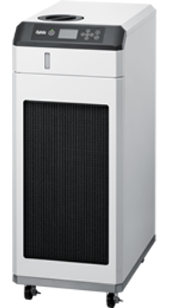
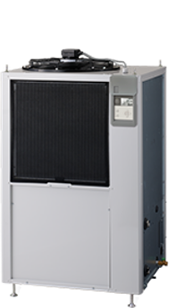
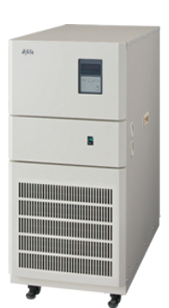
Apiste's chiller lineup
Easy Model Selection Guide
"We need to supply cooling water to the newly installed equipment."
"We want to stabilize product quality."
"Factory machines stop working due to heat"
Concerns about cooling industrial equipment like this are common issues on manufacturing site, and the device that solves these problems is the "chiller (cooling water circulation device)."
Chillers can be broadly divided into two types: "for facilities" and "for air conditioning (buildings)."
In this article, we will focus on "facility chillers" and carefully explain the basic mechanisms and structures, cooling methods, and points to consider when selecting one in an easy-to-understand manner even for beginners.
If you are considering introducing a chiller in your company, please refer to this information.
1. What is a chiller (cooling water circulation device)?
Chillers are devices that cool the heat generated by equipment and processes at manufacturing site, supporting stable operation. Here we will explain the role of chillers and the industrial fields in which they are used.
The basic role of a chiller
Many industrial machines and manufacturing processes generate heat during operation. If the generated heat cannot be sufficiently cooled, the temperature inside the machine will rise, which can cause malfunctions, reduced performance, and even breakdowns. In addition, temperature changes in the products and materials being processed can have a negative impact on quality.
A chiller is a device that efficiently removes heat by circulating a liquid (water, antifreeze, pure water, etc.) controlled at a constant temperature.
Proper cooling leads to stable equipment operation, maintaining product quality, and improving production efficiency.
Industrial fields where chillers are used and specific applications
Chillers are used in a wide variety of industrial fields due to their capacity to precisely control temperature. The main industrial fields and their specific applications are summarized in the table below.
| Industry | Main uses (devices) | Specific cooling and temperature control targets) |
|---|---|---|
| manufacturing industry | ・Machine tools (cutting, grinding, etc.) ・Injection molding machine ・Laser processing machine ・Mixer/Crusher |
- Cooling of the spindle, tools, workpiece, coolant, and temperature control of the hydraulic unit ・Mold cooling, hydraulic oil cooling ・Cooling of laser oscillators and optical systems - Cooling of the device body |
| Food/Beverage | ・Food processing and packaging machinery ・Temperature control of food and liquids |
・Cooling of heating mixers and sealing bars of packaging machines - Temperature control of craft beer maturation tanks and fermentation tanks Temperature control during processing |
| Semiconductors and Electronics | Semiconductor manufacturing equipment | - Wafer chuck temperature control - Temperature control of process gases and chemicals ・Vacuum pump cooling |
| Medical/Pharmaceutical | ・Medical imaging diagnostic equipment (MRI, CT, etc.) ・Pharmaceutical manufacturing equipment (reaction tanks, mixing tanks) |
- Cooling of heat-generating parts inside the device (magnets, control circuits, etc.) ・Reaction temperature control for drug substances and reagents, cooling during the crystallization process (maintaining quality reproducibility) |
| Physics and Chemistry | Analytical equipment, research equipment | ・Maintaining stable operation and performance of analytical equipment - Temperature control and reproducibility during experiments |
In this way, they are used for a wide range of purposes in factories and production lines in a variety of industrial fields.
Chiller Application Guide for the Motor Industry
Click here for Chiller Application Guide for the Transportation Industry
2. Principles and structure of chillers

A chiller is a device that supplies cooling water to the target equipment, removes heat from the equipment, and further cools it. Chillers for equipment have a structure in which freezing cycle, tank, and pump are integrated.
We will explain its principles and structure in three points.
- -What is freezing cycle (cooling circuit)?
- Air-cooling type and water-cooled
- - With and without tanks
The cooling principle of a chiller is based on freezing cycle, which circulates refrigerant to cool the room.
■ What is a chiller's freezing cycle (cooling circuit)?
The core of a chiller is refrigerant" freezing cycle freezing cycle."
- -The evaporator absorbs heat,
- -The compressor compresses it into high-temperature, high-pressure gas,
- -The condenser releases heat to the outside and liquefies the gas.
- - Return to low pressure through the expansion valve,
This refers to a series of cyclical processes.

By repeating this cycle, refrigerant constantly "takes in heat and transports it outside." This is the basis for the chiller's ability to cool objects.
How a chiller cools
Chillers keep objects at a constant temperature by supplying circulating water to the object being cooled.
The mechanism is made up of a combination of a "chilled water circuit" that receives heat from the object to be cooled, and a "freezing cycle (refrigerant circuit)" that carries the received heat to the outside. These two circuits work together to provide stable cooling for the equipment. The flow can be organized step by step as follows.
1. Heat absorption (chilled water circuit)
circulating water absorbs the heat generated by the object to be cooled (laser processing machine, injection molding machine, etc.), causing the water temperature to rise.
2. Heat exchanger (evaporator)
The heated circulating water is sent to the evaporator where it exchanges heat with refrigerant. refrigerant absorbs heat from the water and evaporates, returning circulating water to a low temperature.
3. refrigerant circulation and heat dissipation (freezing cycle)
The evaporated refrigerant gas is converted to a high-temperature, high-pressure state by the compressor and sent to the condenser. The condenser uses outside air (Air-cooling type) or cooling water (water-cooled) to release heat to the outside, and refrigerant is liquefied. The liquefied refrigerant is decompressed by an expansion valve and returns to the evaporator, ready to absorb heat again. This circulation is the "freezing cycle," and is a system that continuously transports heat to the outside.
4. Resupply of cold water
The cooled circulating water is then fed back into the equipment to continuously remove heat.
In this way, a chiller has a dual structure in which "chilled water carries heat out of the device, and refrigerant carries that heat to the outside." It is thanks to freezing cycle that the chilled water is repeatedly cooled, ensuring stable operation of the device.
■ Air-cooling type and water-cooled
Air-cooling type chiller

Water-cooled chiller

Source: Chiller (unit cooler, cooling water circulation device)
Chiller cooling methods are divided into "Air-cooling type" and "water-cooled" depending on how the heat absorbed by refrigerant is released to the outside. Both have the same basic structure, but because the way they release heat is different, there are differences in installation and maintainability.
Air-cooling type chiller
structure
A fan blows outside air into the condenser, allowing direct heat exchange between refrigerant and the air, the same principle as the outdoor unit of an air conditioner.
Features
- - No cooling water piping is required, making installation and relocation easy.
- - The installation costs are lower than those of water-cooled systems.
- - Easy to relocate or move when changing layout, etc.
Water-cooled chiller
structure
The condenser exchanges heat between refrigerant and cooling water, transferring the heat of refrigerant to the cooling water and dissipating it to the outside.
Features
- - No heat is generated indoors, so there is no impact on the outdoor environment.
- - No fan is required, so operation noise is low and quiet.
- -Excellent cooling efficiency compared to Air-cooling type
- - Piping and pumps are required to supply cooling water, which increases the amount of work required for initial construction and maintenance.
Comparison table of Air-cooling type and water-cooled systems
| Air-cooling type chiller | Water-cooled chiller | |
|---|---|---|
| structure | A fan blows air into the condenser, allowing refrigerant to exchange heat with the outside air and release heat. | The condenser exchanges heat between refrigerant and the cooling water, and the heat is released through the cooling water. |
| Cooling performance | It is affected by the outside temperature. In high environment temperatures, capacity decreases. | It has better cooling efficiency than Air-cooling type, but the temperature and amount of cooling water supplied affect its cooling capacity. |
| Installation and implementation | No cooling water piping required. Easy to install and relocate. No cooling water piping work is required, so introduction costs are low. | Cooling water piping and pumps are required, which requires time and cost for construction and maintenance. |
■ With and without tanks
There are two types of chillers: "chillers with built-in water tanks," which have a water tank (tank) built into the main body to store cooling water, and "chillers without water tanks," which do not have an internal water tank.
| Comparison items | Chiller with built-in water tank | Chiller without water tank |
|---|---|---|
| structure | Cooling water from a water tank built into the chiller body is circulated to the equipment. | Used by connecting to an external water tank or pump |
| merit | ・Can be used simply by connecting the chiller body to the object to be cooled ・Can be installed in a space-saving manner |
- Can be connected directly to an open aquarium ・High degree of freedom in designing the size of the tank and the output of the pump |
| Disadvantages | ・The size of the chiller's water tank cannot be changed ・Cannot be connected directly to an open aquarium |
・Aquariums, pumps, piping, etc. must be prepared separately ・In addition to the chiller itself, space is required to install the water tank and piping. |
Chillers with built-in water tanks are easy to install and have the advantage of being able to start operating immediately after purchase, making them ideal for cooling equipment with sealed cooling circuits.
On the other hand, tankless chillers are characterized by the ability to flexibly adjust the amount and flow rate of cooling water. Depending on the piping design, it is also possible to distribute the cooling water supply to multiple pieces of equipment.
Apiste offers a lineup of both chillers with built-in water tanks and chillers without water tanks. Please feel free to contact us for any inquiries regarding the introduction of new chillers or improvements to the cooling of existing facilities.
3. Points to note when selecting and installing a chiller
There are several important points to note when selecting and installing an appropriate chiller. By checking these points in advance, you can prevent problems after installation and ensure efficient operation.
■ Check whether cooling capacity is sufficient for the cooling target.
The most important thing when selecting a chiller is to confirm whether the chiller's cooling capacity is sufficient for the object to be cooled. If cooling capacity is insufficient, the expected cooling effect will not be achieved, which may lead to equipment failure or reduced production efficiency.
Specifically, you should understand the following elements in detail in advance.
- - Accurate heat output of the object being cooled (calculate exactly how much heat the object will generate)
- - Required cooling temperature (decide the set temperature at which you want the chiller to operate)
- - Flow rate of the circulating liquid (to understand the amount of liquid supplied to the object to be cooled)
Based on this information, you need to confirm whether the chiller's cooling capacity (expressed in units such as kW or kcal/h) is appropriate. There are two ways to calculate the required cooling capacity:
- - Calculated from the cooling time and temperature of the object to be cooled
- -Calculated from the flow rate of circulating water and the temperature difference from the load (equipment) side
The calculation method is explained on the following page.
https://www.apiste.co.jp/pcu/guide/
https://www.apiste.co.jp/contents/pcu/chiller_guide/bacic/ability/
At Apiste, our dedicated technical sales staff will support you with even complex capacity calculations. Please feel free to contact us for any inquiries.
■ Check the installation space and environment conditions
The required installation space and impact on ambient environment vary greatly depending on the chiller's cooling method.
Air-cooling type chiller
Although it can be installed in a relatively small space, there are concerns about the room temperature rising due to the exhaust heat and noise generation. Especially when installing indoors, ensure there is sufficient capacity and consider the impact on the work environment.
Water-cooled chiller
While this system has high cooling efficiency, it requires a large amount of space for the cooling tower and cooling water piping. When designing the entire system, be sure to consider the location of these auxiliary facilities.
It is important to thoroughly evaluate the installation environment (indoor/outdoor, ambient temperature, ventilation capacity, noise regulations, etc.) to select the optimal heat removal method, and then make the final decision on whether to install an Air-cooling type or water-cooled chiller.
■ Determine the pump capacity
In addition to cooling capacity of the chiller, capacity of the circulation pump is also important. In order to efficiently deliver cooling water to the object to be cooled, the pump capacity must be appropriate to the piping conditions.
Specifically, the "head" required for a pump is determined by factors such as pipe length, pipe diameter, and joints (pipe connection parts). Head indicates the height and resistance to which a pump can push water. The optimal pump capacity is determined by this head.
Determining pump capacity may require specialized calculations, so please also refer to the link below for detailed calculation formulas.
4. Choose the right chiller for your purpose

As explained above, there are many different types of chillers depending on their purpose, structure, and cooling method. To select the optimal chiller, it is essential to comprehensively consider a variety of factors, including the characteristics of the object to be cooled, the installation environment, budget, and long-term operating costs.
At Apiste, we will propose the optimal chiller based on your desired conditions and detailed specification. If you are considering introducing a chiller, please feel free to contact us. We would be happy to help you find the perfect unit for your purposes.